

In today’s digital landscape, YouTube SEO is paramount for content creators aiming to expand their audience and achieve online success. Effectively optimizing your videos for YouTube search ensures that your content is discoverable by the right viewers, increasing your video views, channel subscriptions, and overall reach. This comprehensive guide will delve into the crucial elements of YouTube SEO, offering practical strategies to rank your videos higher in search results and maximize reach.
From keyword research and optimization to compelling video descriptions and engaging thumbnails, we’ll cover the essential techniques to improve your video’s visibility. By understanding how YouTube’s search algorithm works and implementing the best practices outlined in this article, you can effectively rank your videos for maximum reach and connect with a wider audience. Learn how to leverage YouTube SEO to propel your channel’s growth and achieve your content goals.
Why YouTube Is a Powerful Search Engine
While often overlooked, YouTube functions as a highly effective search engine. Beyond its vast library of entertainment content, users regularly turn to the platform for informational searches, how-to videos, product reviews, and educational materials. This is driven by the visual nature of video, which allows for more engaging and easily digestible information compared to traditional text-based searches. Furthermore, YouTube’s sophisticated algorithm effectively connects users with relevant content based on their search history and preferences, creating a personalized search experience.
The community aspect of YouTube contributes significantly to its search engine power. User comments, ratings, and subscriptions provide valuable social proof, helping viewers discern credible sources and filter through the abundance of available content. This interactive element fosters a sense of trust and community, leading users to rely on YouTube for information gathering and decision-making.
For content creators, understanding YouTube’s search engine capabilities is crucial. By optimizing titles, descriptions, and tags with relevant keywords, creators can increase the visibility of their videos and reach a wider audience. This involves understanding what users are searching for and tailoring content to meet their specific needs. Ultimately, YouTube’s blend of visual learning, community engagement, and robust search functionality establishes its position as a prominent player in the online search landscape.
Title and Thumbnail Optimization
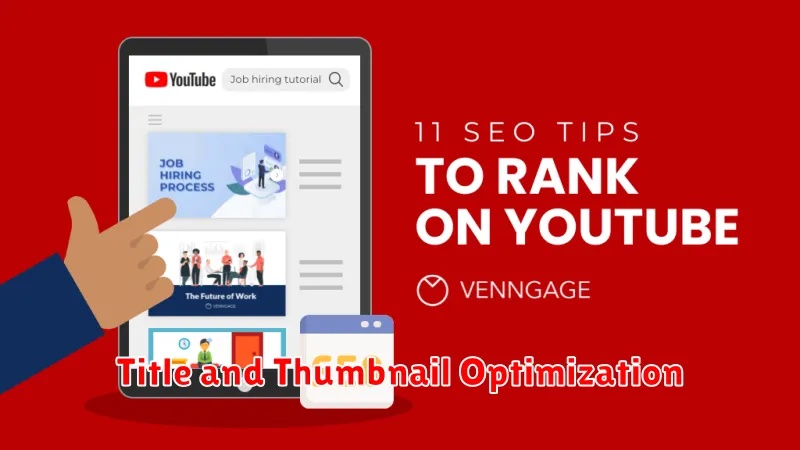
Titles and thumbnails are crucial for attracting viewers. A compelling title accurately reflects the video’s content while also piquing interest. Keep titles concise, using strong keywords to improve searchability. An effective thumbnail provides a visually appealing preview, enticing clicks and views.
Optimizing these elements involves understanding your target audience. Consider what keywords they might use when searching for content similar to yours. A/B testing different titles and thumbnails can help determine which variations perform best. Analyze metrics like click-through rate (CTR) and watch time to gauge effectiveness.
Careful consideration of title and thumbnail optimization can significantly impact a video’s success. By creating engaging and informative titles and visually appealing thumbnails, content creators can increase visibility, attract a wider audience, and ultimately drive higher viewership.
Using Keyword-Rich Descriptions
Keyword-rich descriptions are crucial for improving a website’s search engine optimization (SEO). By strategically incorporating relevant keywords into your descriptions, you increase the likelihood of your website appearing in search results when users query those terms. This enhanced visibility can drive more organic traffic to your site, leading to increased engagement and potential conversions.
Crafting effective keyword-rich descriptions requires a balance between incorporating relevant terms and maintaining natural, readable language. Avoid keyword stuffing, which is the practice of excessively using keywords to manipulate search rankings. Search engines penalize this practice, and it can result in a poor user experience. Instead, focus on seamlessly weaving in keywords that accurately reflect the content of the page. Consider the user’s perspective: what terms are they likely to search for when looking for information related to your content?
While focusing on keywords is essential, remember that the primary goal of a description is to inform and engage the user. A compelling description should accurately summarize the page’s content and entice users to click through. Thus, clarity, conciseness, and relevance are key elements to consider when creating effective, keyword-rich descriptions.
Tagging and Hashtags on YouTube
Tags and hashtags play distinct, yet important roles in YouTube’s search and discovery system. Tags are hidden keywords that help YouTube understand the content and context of your video. They are crucial for helping YouTube’s algorithm categorize your video and suggest it to relevant viewers. Think of tags as descriptors that tell YouTube what your video is about. Use a variety of relevant tags, including specific keywords, broader topics, and related terms. Accurate and comprehensive tagging significantly improves the chances of your video being discovered through searches.
Hashtags, on the other hand, are publicly visible and clickable. They categorize your video within searchable topics on the platform. When viewers click on a hashtag, they are taken to a page featuring all videos that use that same hashtag. This increases the discoverability of your video, especially when viewers are actively searching for content related to specific topics. Limit the number of hashtags you use, focusing on a few highly relevant and popular ones to maximize their impact.
Strategically utilizing both tags and hashtags is essential for optimizing your YouTube videos. Tags help YouTube’s algorithm understand your video’s content, while hashtags connect your video with viewers actively seeking specific topics. By effectively utilizing both, you significantly improve your video’s visibility and reach a wider audience.
Engagement Signals That Affect Rankings

Engagement signals are user behaviors on a website that search engines may use to gauge the quality and relevance of content. While not definitively confirmed as direct ranking factors by Google, these signals can indirectly influence rankings by impacting other factors that are confirmed. Strong engagement often leads to increased visibility, as satisfied users are more likely to share content, link to it, and return for future visits, all of which can boost a site’s authority and search performance. Key engagement metrics include bounce rate, time on page, and click-through rate (CTR). Improving these metrics suggests to search engines that your content effectively meets user needs.
A high bounce rate, where users quickly leave a page, can signal to search engines that the content is not relevant or engaging. Conversely, a long time on page indicates users are finding the content valuable and absorbing the information presented. Click-through rate, the percentage of users who click on a search result, signifies the relevance and appeal of the title and description displayed in search results. Monitoring and improving these metrics is crucial for optimizing user experience and potentially influencing search rankings.
While correlation doesn’t equal causation, focusing on positive engagement often leads to improved SEO performance. By creating high-quality, relevant content that resonates with your target audience, you can naturally increase user engagement, which, in turn, can positively influence other ranking factors like backlinks and brand mentions. Ultimately, a user-centric approach to content creation benefits both your audience and your search engine optimization efforts.
Closed Captions and Subtitles Benefits
Closed captions and subtitles offer significant accessibility benefits. They provide crucial access to audio content for individuals who are deaf or hard of hearing, allowing them to fully engage with videos, movies, and other media. Furthermore, they enhance comprehension for viewers who may struggle with accents, fast speech, or complex terminology. They also benefit language learners by providing a visual aid to connect spoken words with their written counterparts.
Beyond accessibility, closed captions and subtitles also offer practical advantages. They enable viewers to understand dialogue in noisy environments or when listening discreetly with the volume down. This is particularly helpful in public spaces, such as libraries, gyms, or on public transportation. They also facilitate content consumption for viewers unfamiliar with the language being spoken, broadening access to international media.
In educational settings, captions and subtitles prove invaluable. They improve comprehension and retention of information presented in videos and lectures. They also create a more inclusive learning environment for students with diverse learning needs and language backgrounds. By reinforcing spoken words with text, they can improve literacy skills and vocabulary acquisition.
Playlists and Video Structure
Playlists are a powerful tool for organizing and presenting video content. They allow creators to group related videos together, creating a more cohesive viewing experience for their audience. Effective playlists can increase watch time, improve channel engagement, and help viewers discover more of your content. Think of playlists as curated collections that guide viewers through a specific topic or series.
Individual video structure is equally crucial. Each video should have a clear beginning, middle, and end. The beginning should grab the viewer’s attention and introduce the topic. The middle should deliver the core content in a concise and engaging manner. The end should provide a satisfying conclusion and, if applicable, a call to action, such as subscribing or watching the next video in the playlist.
By combining well-structured videos with thoughtfully curated playlists, creators can significantly improve their channel performance and provide a more enjoyable viewing experience for their audience. This structure helps viewers easily navigate content and find what they’re looking for, leading to increased engagement and overall satisfaction.
Promoting Videos Beyond YouTube
While YouTube is a powerful platform, promoting your videos elsewhere is crucial for maximizing reach. Cross-promotion is key. Share your videos on other social media platforms like Facebook, Twitter, Instagram, and TikTok, tailoring your message to each platform’s audience. Embed videos on your website or blog to drive traffic and engagement directly. Consider using email marketing to notify subscribers of new content.
Engage with online communities related to your video’s topic. Participating in forums, subreddits, and Facebook groups allows you to share your expertise and subtly promote your content. Targeted outreach to influencers or bloggers in your niche can also significantly expand your viewership. Collaborations and cross-promotional opportunities with other creators can introduce your content to a new audience.
Paid advertising can boost visibility. Consider exploring YouTube Ads, social media ads, and even influencer marketing campaigns to reach a wider audience. Track your analytics to see what’s working and refine your promotion strategy accordingly. Pay attention to which platforms are driving the most traffic and adjust your efforts based on the data.
Analytics to Track Performance
Tracking performance is crucial for understanding the effectiveness of strategies and making data-driven decisions. By analyzing key metrics, businesses can identify areas of strength and weakness, allowing for adjustments and optimizations to improve overall results. Utilizing analytics provides valuable insights into customer behavior, marketing campaign performance, and overall business growth.
Key performance indicators (KPIs) vary depending on the specific goals and objectives. Common KPIs include website traffic, conversion rates, customer acquisition cost, and return on investment (ROI). Monitoring these metrics helps businesses measure progress towards goals and identify trends that can inform future strategies. Regularly reviewing data allows for proactive adjustments to maximize impact and efficiency.
Several analytics tools are available to help businesses track and analyze their performance. These tools provide dashboards and reports that visualize data in a clear and concise manner, making it easier to understand complex information. Some popular examples include Google Analytics, social media analytics platforms, and various marketing automation software. Choosing the right tool depends on the specific needs and resources of the business.
Ranking Long-Term vs Trending Content
Long-term content focuses on evergreen topics that remain relevant and valuable for extended periods. This type of content aims to rank high in search engine results consistently over time, attracting a steady stream of organic traffic. It often targets broader keywords with higher search volume and requires in-depth research and comprehensive coverage. Examples include ultimate guides, tutorials, and glossary definitions.
Trending content, on the other hand, capitalizes on current events, popular culture, or seasonal topics. It aims to capture immediate attention and generate a surge in traffic within a short timeframe. Trending content often targets highly specific keywords with a lower search volume but higher competition during the trend’s peak. Examples include news articles, reactions to viral videos, or holiday-themed content. The lifespan of trending content is typically short, declining rapidly as the topic loses relevance.
While both content types serve different purposes, a successful content strategy often incorporates both. Long-term content builds a solid foundation of authority and consistent traffic, while trending content provides opportunities to boost visibility, reach new audiences, and capitalize on current interests. By understanding the differences and strategically leveraging both approaches, content creators can maximize their reach and impact.
